The instructions for one famous sweet bread tell you to squish a plastic bag every single day. No kneading, no bowl, just a daily squeeze of a bubbling bag on your counter.
I love that detail, because it sounds more like a science project than a family recipe.
Here’s the twist. Despite the name, food historians have found no solid proof that Amish bakers invented this loaf or its sharing rules.
The idea of passing a living starter between friends is much older, with similar cakes traced back to the 1860s.
The version many moms remember arrived on a photocopied sheet with a ten-day schedule. Day 10 meant baking one loaf and handing out extra bags to friends.
That is how a single starter could fill a whole neighborhood with cinnamon loaves.
So who started it, and why did everyone end up with too many bags? The answers are pretty sweet.
A Bag of Bubbling Friendship Bread Starter Shows Up on Your Doorstep
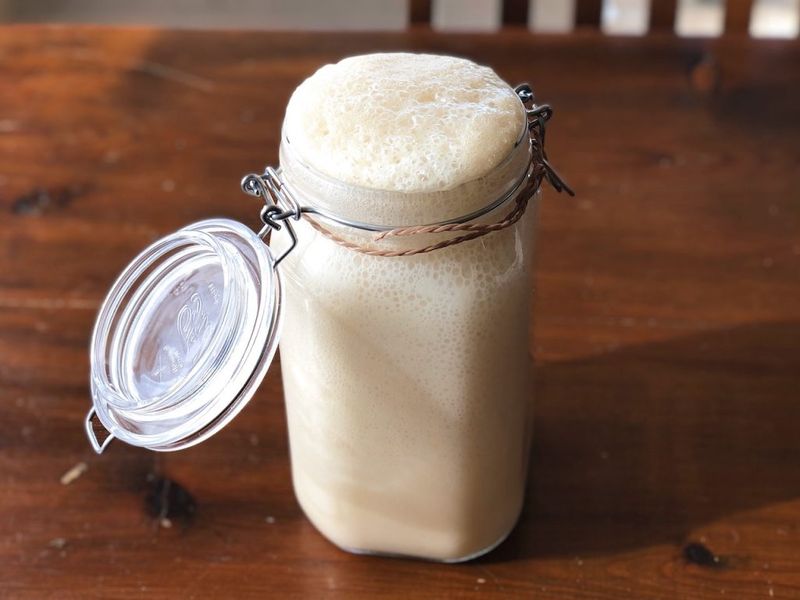
Some gifts come with a bow, but this one came with homework. A zip-top bag of beige, bubbling batter usually arrived with a sheet of instructions taped to the side.
That sheet was the real engine of the tradition. It told you exactly what to do for ten days, and it usually ended by asking you to pass the starter along to friends.
Plenty of people compare the whole thing to a chain letter, and the match is pretty close. Chain letters asked you to copy a message and mail it to several people.
Friendship bread asked you to divide your batter and give away several bags.
The difference, of course, is that you got a sweet cinnamon loaf out of the deal. Nobody ever got a cake from a chain letter, as far as I know.
Receiving a bag also put you on the clock right away. The starter was alive and already fermenting, so you could not just toss it in a drawer and forget about it for a month.
If you get one today, check the date written on the bag first. The instructions count from the day the starter was last fed, not the day it reached your kitchen.
Keep the bag at room temperature and let some air escape now and then. Fermenting yeast makes gas, and a puffed-up bag is normal rather than a sign of trouble.
Just don’t let it burst all over your counter, because sticky batter in the toaster is nobody’s idea of fun.
Pioneer Friendship Cake Starters Were Shared Long Before the Amish Name Stuck
Long before anyone mailed a recipe by email, women were swapping living starters by hand. Food historian Anne Byrn, who researched American cake history for her book American Cake, traced friendship-style cakes back to the 1860s.
Those early versions grew out of a simple, practical habit. A cook kept a fermenting starter going and shared portions with other women, so more kitchens could bake without starting from scratch.
Europe had its own version too. A German-style sweet starter cake known as Herman became famous as a shared friendship cake, and it worked on the same pass-it-along idea.
So the concept was old even when the modern name was new. The label Amish Friendship Bread seems to have attached itself much later, and nobody has pinned down exactly when or why.
I find that gap kind of fascinating. A recipe can travel through thousands of kitchens and still leave no clear record of its first baker.
Plenty of sources also link the sharing habit to hard times like the Great Depression. Passing along a starter cost very little and stretched ingredients, though documentation for specific recipes from that era is thin.
Treat these stories as a broad history of sharing rather than one tidy origin. The safest summary is this: starter swapping is old, while the exact sweet bread on your mom’s counter is more recent.
That honest version is still a pretty good story to tell over a slice.
The Amish Label on Cinnamon Friendship Bread Is More Mystery Than Fact
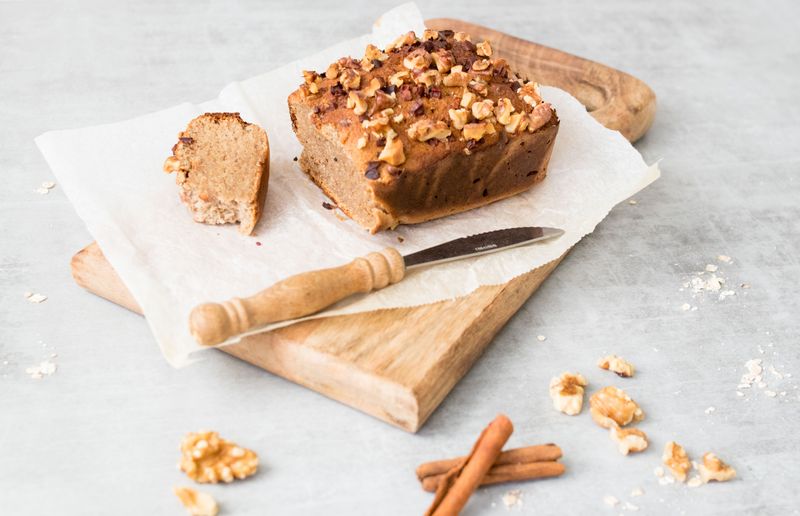
Names can be sneaky little marketers. Calling a loaf Amish instantly suggests farmhouse kitchens, handmade quilts, and recipes passed down for generations.
The trouble is the evidence. Food writers and historians generally agree there is no clear proof that Amish communities created this sweet starter bread or its chain-letter routine.
That does not mean Amish cooks never baked it. It simply means the name alone cannot tell you where the recipe began.
Some writers point to the Amish idea of Gemeinschaft, a German word for community and mutual support. Sharing food with neighbors fits that value nicely, which may explain why the name felt right to so many people.
Fitting a value is different from inventing a recipe, though. Lots of food names were chosen because they sounded wholesome, not because they were historically accurate.
The instant pudding mix found in many modern versions is a clue too. Boxed instant pudding was a 20th-century grocery store product, which tells you the popular recipe as printed is fairly modern.
It also helps to remember that Amish communities are not one single group. Different church districts follow different practices, so no single recipe can speak for all of them.
Enjoy the bread for what it is: a shared American kitchen tradition with a catchy name. You can love the loaf without needing a made-up backstory to go with it.
Milk, Sugar, and Yeast Make Friendship Bread Starter Different From Sourdough
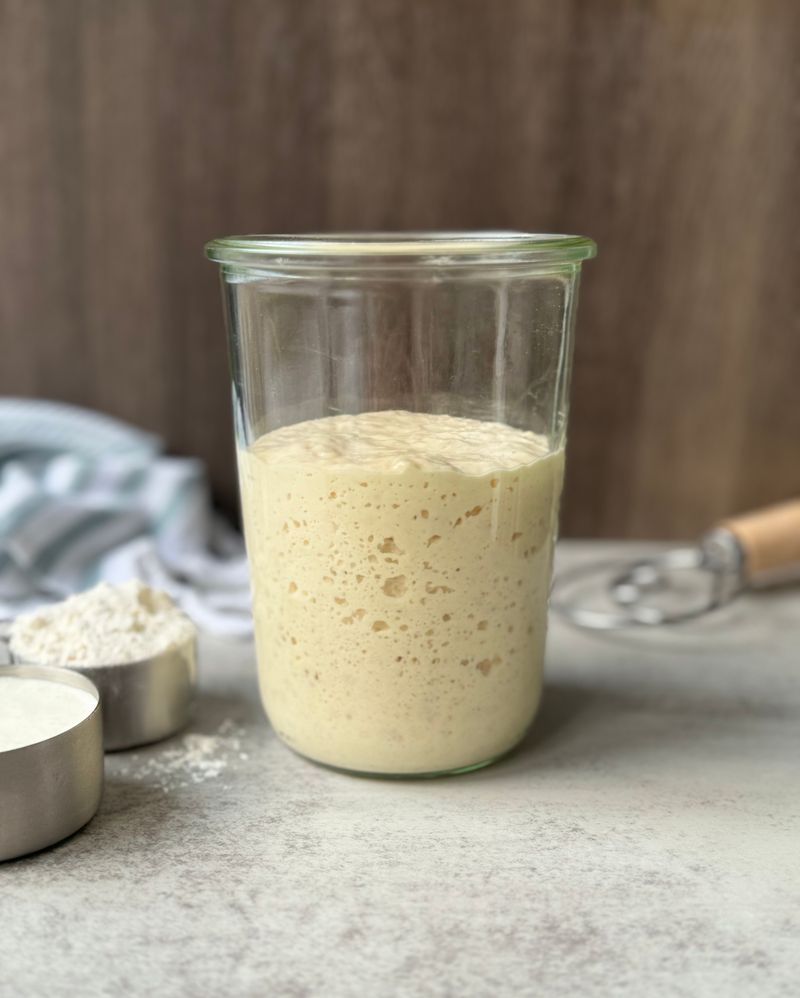
Calling this a sourdough is a bit like calling a cupcake a dinner roll. They share some family traits, but they behave very differently on the plate.
Classic sourdough starter is just flour and water. Wild yeasts and bacteria from the flour and air do the work, creating that tangy flavor and chewy crumb.
Friendship bread starter usually takes a shortcut. Common recipes begin with a packet of active dry yeast, warm water, flour, sugar, and milk.
That sugar feeds the yeast fast, and the milk adds richness. The result is a sweet, slightly tangy batter rather than a sour, stretchy dough.
Many friendship starters still pick up a gentle sour note over ten days. Fermentation creates acids, so the batter does take on a mild sourness.
The final bread is different too. Most friendship bread recipes use baking soda and baking powder in the batter, so the loaf rises like a quick bread or cake.
A sourdough boule, by contrast, rises slowly from the starter alone. You would never confuse the two once you tasted them side by side.
Keep that in mind if you plan to swap starters. Feeding your sourdough with milk and sugar, or your friendship starter with only water, will change how each one behaves.
Choose the right care for the right jar, and both will treat you well.
Mash the Bag Daily During the Ten-Day Friendship Bread Starter Cycle
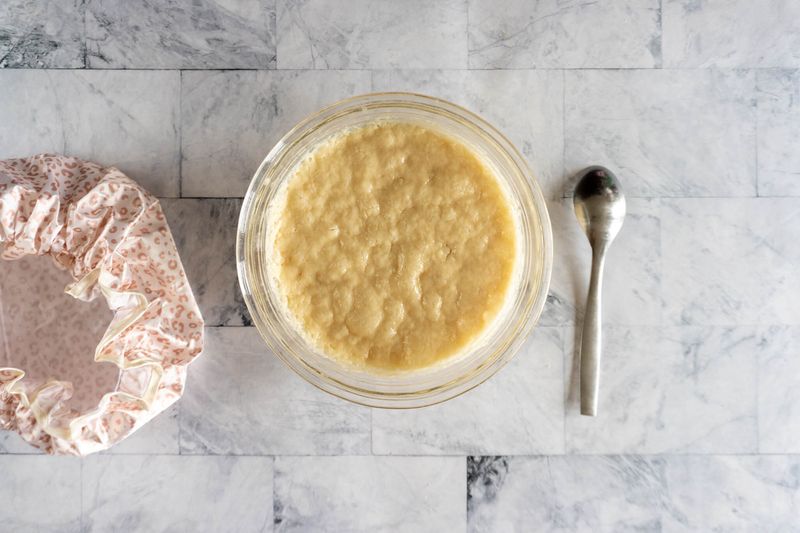
Few recipes ask you to give your batter a daily hug. The ten-day schedule sounds fussy, but most days you only squeeze the bag.
Here is how the common modern version runs. Day 1 is the day you receive or make the starter, so you do nothing except leave it on the counter.
- Days 2 through 5: mash the bag.
- Day 6: add 1 cup flour, 1 cup sugar, and 1 cup milk, then mash.
- Days 7 through 9: mash the bag.
- Day 10: pour into a large non-metal bowl and add 1 cup each of flour, sugar, and milk.
On Day 10 you split the batter. Most printed instructions call for four separate 1-cup portions in gallon zip-top bags.
One cup stays with you to start the cycle again. The others go to friends, along with a copy of the instructions.
What remains goes into your own baking. That is the moment you finally get to taste your ten days of patience.
Many instruction sheets warn against metal bowls and spoons. Bakers say the acidic batter can react with some metals, so plastic, glass, or wooden tools are the usual choice.
Mashing does more than keep you busy. It mixes the ingredients and lets the yeast reach fresh food, which keeps the fermentation moving evenly.
Try setting a phone reminder if you tend to forget, since the bag will not remind you itself.
Instant Pudding Turns Friendship Bread Batter Into a Cinnamon Sugar Loaf
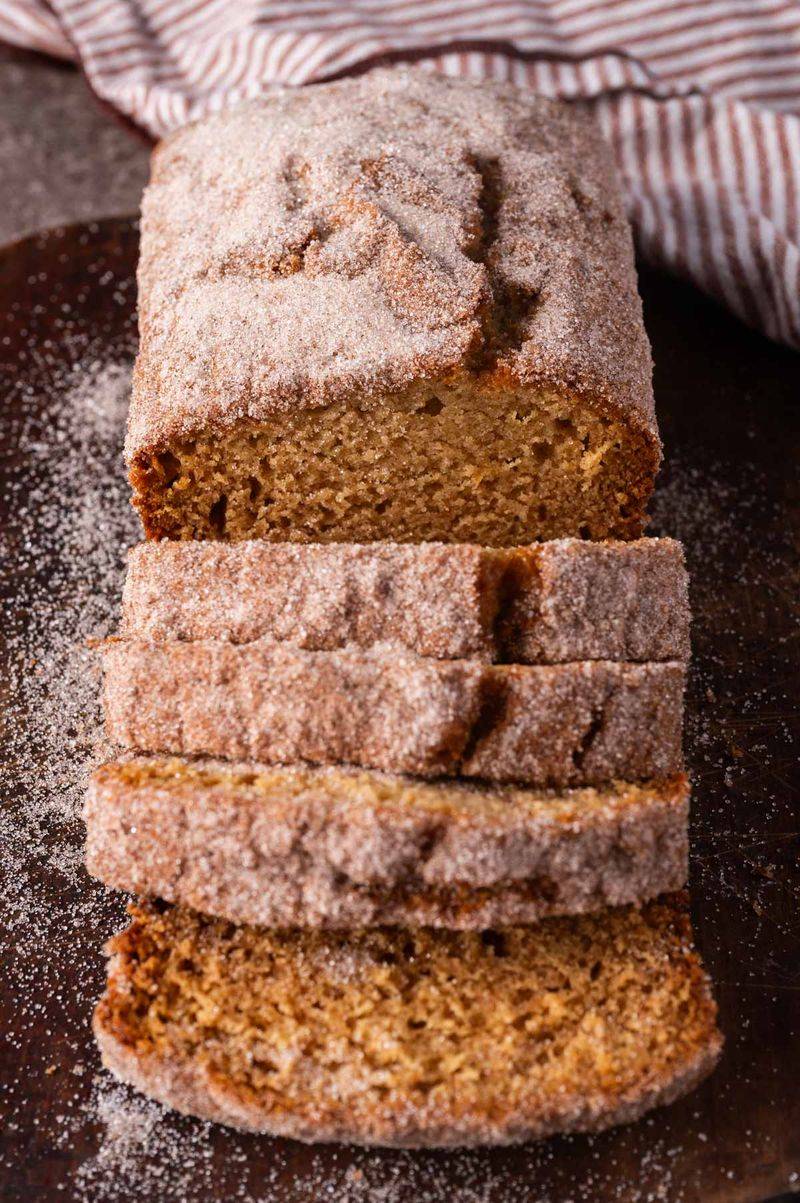
Boxed vanilla pudding might be the most surprising ingredient in this whole story. Many of the most widely shared recipes from the late 20th century call for one small box of instant pudding mix.
The pudding adds moisture and sweetness. It also gives the loaf a soft, almost pound-cake texture that people tend to remember.
A common version mixes your remaining starter with 3 eggs, 1 cup oil, 1/2 cup milk, 1 cup sugar, and 1/2 teaspoon vanilla. You then add 2 cups flour, 1 1/2 teaspoons baking powder, 1/2 teaspoon baking soda, 1/2 teaspoon salt, 2 teaspoons cinnamon, and the pudding mix.
The pans get a special treatment. You grease two loaf pans, then dust them with a mix of sugar and cinnamon before pouring in the batter.
More cinnamon sugar goes on top. Bake at 325 degrees Fahrenheit for about one hour, until a toothpick comes out clean.
That sugary coating bakes into a crackly crust. It is the part kids tend to pick off first, so maybe guard the loaf.
Keep in mind this is a modern recipe, not an ancient one. Instant pudding mix only became a common pantry item in the mid-1900s.
If you can’t find pudding mix, some bakers skip it and add a bit more flour and sugar. The loaf comes out a little less moist, but it still bakes up nicely.
Chocolate, Lemon, and Banana Friendship Bread Swap Pudding Flavors for Fun
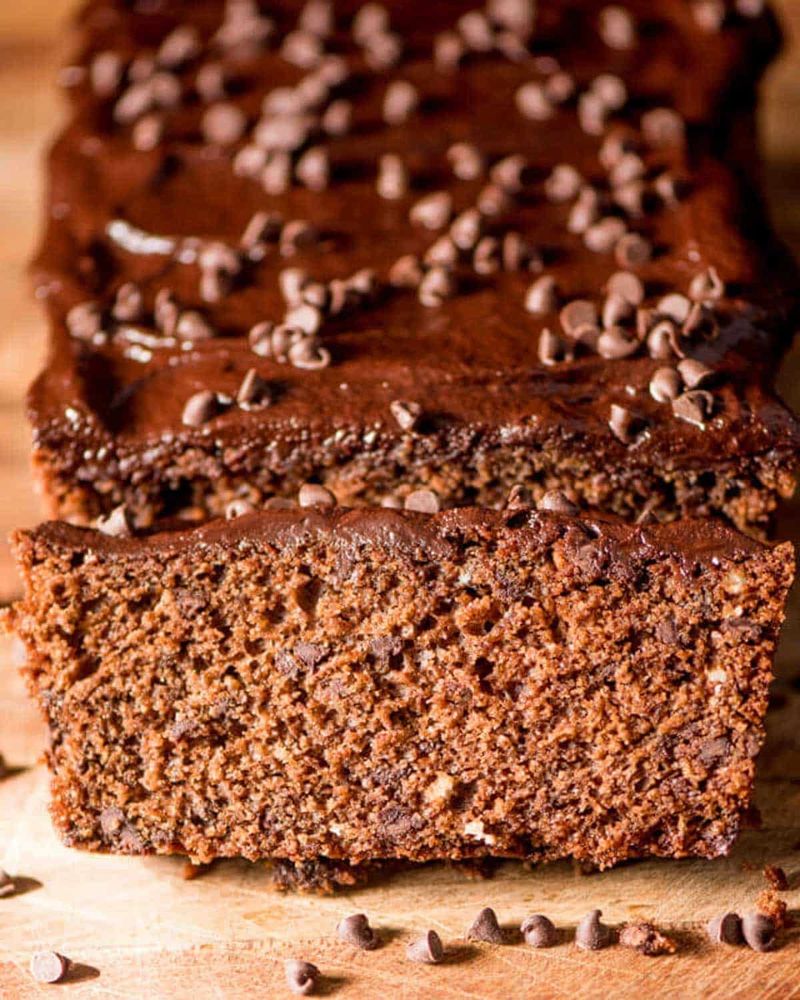
Once pudding entered the picture, the flavor door swung wide open. Swap vanilla for chocolate pudding, and suddenly your cinnamon loaf becomes a chocolate one.
Bakers have spent decades playing with this trick. Lemon, butterscotch, pistachio, and banana pudding all show up in shared recipe collections online.
Mix-ins add another layer. Chocolate chips, chopped nuts, raisins, blueberries, and mashed bananas are all common additions.
A simple rule helps you avoid a soggy middle. Add about 1 cup of chips or nuts, and toss them with a spoonful of flour so they don’t sink.
Wet add-ins need more care. Mashed fruit adds extra liquid, so your loaf may need longer in the oven.
Check with a toothpick in the center rather than trusting the clock. A few moist crumbs are fine, but wet batter means it needs more time.
Muffins are another handy option. The same batter fills about 24 muffin cups and bakes much faster, usually around 20 to 25 minutes.
I love how the chain-letter setup encourages this kind of tinkering. Every person who received a bag could hand along their own twist with the next one.
Try writing your favorite variation on the instruction sheet you pass along. It keeps the tradition moving while adding your own small signature, just like generations of home bakers before you.
Your friend may even send back a new flavor next round.
Freezing Extra Friendship Bread Starter Saves You From Too Many Bags
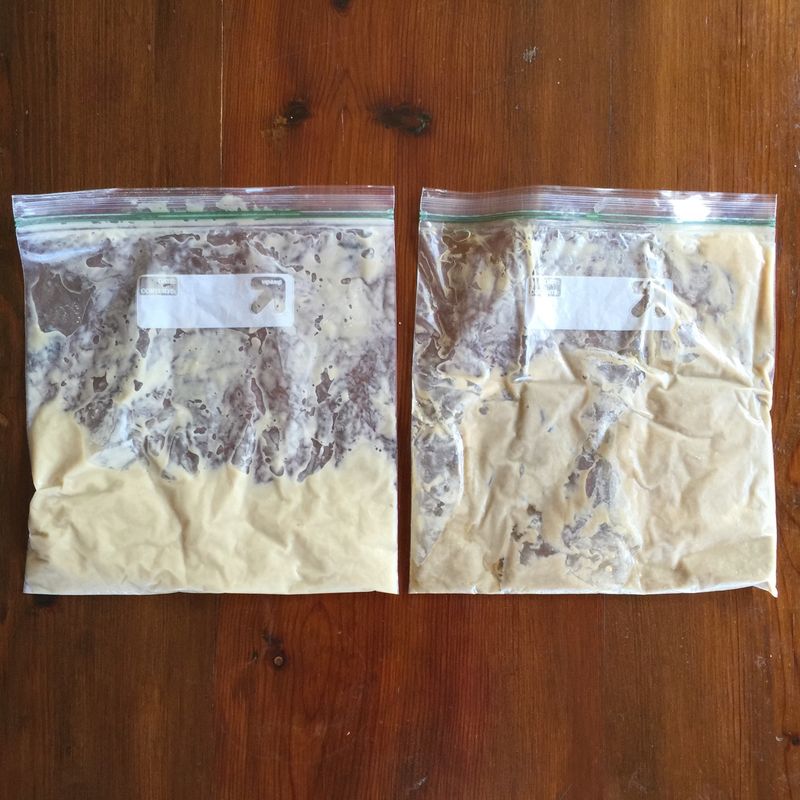
Every chain letter eventually runs into the same problem: you run out of friends. After a few rounds, neighbors start politely backing away when you show up with another bag.
Good news, you have options. Many experienced bakers freeze extra 1-cup portions of starter in labeled zip-top bags.
Freezing slows the yeast way down. When you are ready, thaw the bag at room temperature and treat the thaw day as Day 1.
Thawed starter may look sluggish at first. Give it a day or two to wake up and start bubbling again before you judge it.
You can also simply bake more. The Day 10 batter can be split into several batches if you have more eggs, oil, and pans on hand.
Missing a day of mashing is usually not a disaster. Most friendship bread fans say to just pick up where you left off.
Food safety still matters with a milk-based starter. Throw it out if you see mold, pink or orange streaks, or smell something truly rotten rather than yeasty.
Wash your hands and use clean tools when you feed it. Shared starters travel through many kitchens, so basic cleanliness helps keep every batch healthy.
And if you need a break, saying no thanks is perfectly fine. The whole point was friendship, not guilt, and a good friend will understand.
Maybe just offer them a slice of your last loaf as a peace offering.